


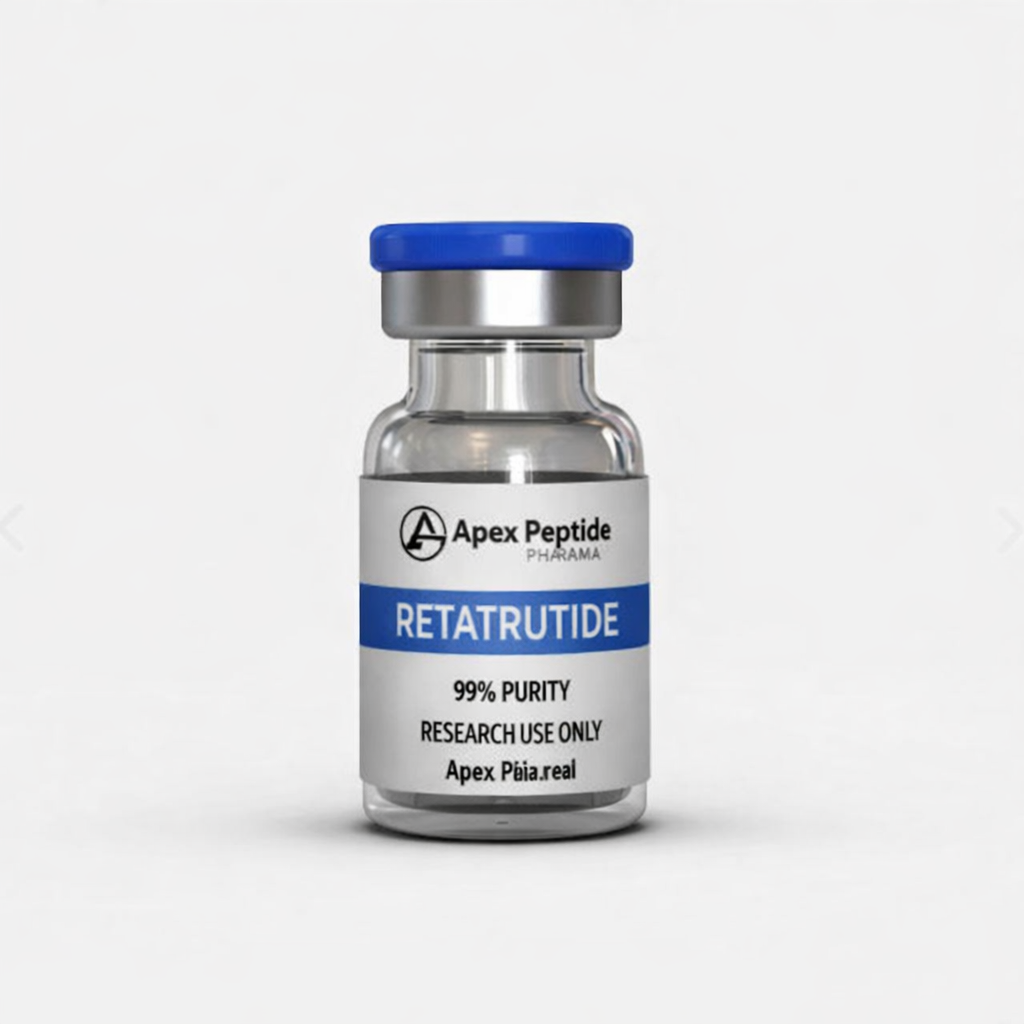
Retatrutide Vial

Price range: $90.00 through $390.00
Retatrutide vials are third party tested and comes with COAs
Retatrutide Peptide – Cutting-Edge Triple GIP/GLP-1/Glucagon Receptor Agonist for Advanced Metabolic Research
Retatrutide Peptide (LY3437943) represents a groundbreaking advancement in metabolic research as the first-in-class synthetic triple agonist targeting the glucose-dependent insulinotropic polypeptide (GIP), glucagon-like peptide-1 (GLP-1), and glucagon (GCG) receptors. This innovative 39-amino-acid polypeptide is chemically modified with a C20 fatty diacid moiety attached via a linker, enabling strong albumin binding that extends its plasma half-life to approximately 6 days. This pharmacokinetic profile supports convenient once-weekly subcutaneous administration in research protocols, providing sustained receptor activation without the peaks and troughs associated with shorter-acting compounds.
Unlike single or dual agonists such as semaglutide or tirzepatide, retatrutide delivers balanced yet potent multi-receptor engagement. It exhibits enhanced potency at the GIP receptor (approximately 8.9-fold greater than native GIP) while maintaining clinically relevant but relatively attenuated activation at GLP-1 and glucagon receptors. This triple agonism creates synergistic effects across central and peripheral pathways, influencing appetite regulation, energy expenditure, glucose homeostasis, lipid metabolism, and substrate utilization. Researchers value retatrutide for exploring how simultaneous modulation of these incretin and glucagon pathways can achieve superior outcomes compared to existing dual-agonist profiles, potentially redefining therapeutic strategies for obesity, type 2 diabetes, and related cardiometabolic disorders.
Key Research Applications and Observed Effects
Clinical and preclinical investigations highlight retatrutide’s profound impact on body composition and metabolic health. In a key phase 2 trial involving adults with obesity (without type 2 diabetes), once-weekly retatrutide produced dose-dependent weight reductions. At 48 weeks, the 12 mg dose achieved a mean weight loss of 24.2% from baseline (versus 2.1% with placebo), with many participants continuing to lose weight without reaching a plateau. High proportions reached clinically meaningful thresholds: up to 100% lost ≥5%, 93% lost ≥10%, and 83% lost ≥15% of body weight at higher doses. Absolute losses approached 26 kg in some cases, often accompanied by significant reductions in fat mass and waist circumference while showing relative preservation of lean mass in various analyses.
Glycemic benefits are equally compelling. In participants with type 2 diabetes, retatrutide lowered HbA1c by up to 2.0–2.2% at 36–40 weeks across doses, with improvements in fasting glucose, insulin sensitivity, and a high rate of reversion from prediabetes to normoglycemia (up to 72% in relevant cohorts). The compound promotes glucose-dependent insulin secretion while modulating glucagon in a context-appropriate manner, minimizing hypoglycemia risk and supporting robust investigations into insulin dynamics and long-term glucose control.
Appetite and energy balance research benefits from retatrutide’s multi-pathway action. GLP-1 and GIP components contribute to reduced food intake, delayed gastric emptying, and enhanced satiety signaling in the central nervous system. The glucagon receptor agonism adds a unique dimension by increasing energy expenditure through effects on liver and adipose tissue, promoting fat oxidation and thermogenesis. This combination supports studies on profound satiety mechanisms, altered substrate utilization, and reduced visceral adiposity—effects that appear more pronounced than those seen with dual agonists alone.
Cardiometabolic and liver health represent promising frontiers. Retatrutide has demonstrated improvements in lipid profiles (reductions in triglycerides and LDL cholesterol), blood pressure (with some participants able to reduce antihypertensive medications), and inflammatory markers. Significant decreases in liver fat content position it as a valuable tool for NAFLD/NASH models. Broader endocrine rewiring, including modulation of biomarkers linked to adipose regulation and insulin sensitivity, further underscores its potential in metabolic syndrome and cardiovascular risk research. Ongoing phase 3 programs (such as the TRIUMPH and TRANSCEND series) continue to evaluate these outcomes in larger, longer-term settings, including direct comparisons with tirzepatide.
Product Highlights for Research Use
Retatrutide is supplied as a high-purity (≥98% by HPLC) synthetic lyophilized powder, ensuring maximum stability and flexibility for reconstitution in laboratory settings. The bioactive acylated form maintains its extended half-life, making it ideal for once-weekly dosing protocols in metabolic studies. Research-grade vials are available in various quantities, including 5 mg, 10 mg, 20 mg, and higher options to accommodate dose-escalation and long-term experiments. Proper storage in a cool, dry environment preserves integrity for extended research timelines.
Safety Profile in Research Contexts
Gastrointestinal events (nausea, vomiting, diarrhea, constipation) remain the most common adverse effects, typically mild to moderate, dose-dependent, and often mitigated by gradual dose escalation starting at lower levels (e.g., 2 mg). These effects generally align with the class profile of incretin-based therapies and tend to diminish over time. Dose-related increases in heart rate have been observed, peaking around 24 weeks before declining. Hypersensitivity reactions occur at low rates. Researchers should note that retatrutide remains investigational, with comprehensive safety data continuing to emerge from phase 3 trials. Its tolerability supports its utility in controlled metabolic investigations, though careful monitoring is essential in all experimental designs.
Why Retatrutide Stands Out in Advanced Metabolic Research
By engaging three complementary hormonal pathways in a single molecule, retatrutide offers an unprecedented platform to dissect synergistic effects on energy homeostasis that surpass those of dual agonists. Its ability to drive substantial, sustained weight and fat loss—while improving glycemic parameters, energy expenditure, and cardiometabolic markers—positions it as a cutting-edge tool for obesity, diabetes, NAFLD, and broader endocrine research. The absence of a clear weight-loss plateau in early studies suggests potential for even greater long-term efficacy in extended protocols.
For laboratories focused on next-generation therapeutics, retatrutide provides a versatile, high-potency research peptide to explore multi-receptor pharmacology, body composition dynamics, and metabolic rewiring. Its design reflects sophisticated peptide engineering: strategic amino acid substitutions (including Aib and α-methyl leucine) combined with site-specific lipidation optimize receptor selectivity, stability, and duration of action.
As phase 3 data mature and head-to-head comparisons progress, retatrutide continues to generate excitement for its capacity to address the multifaceted nature of metabolic disease more comprehensively than prior generations of incretin mimetics. Researchers seeking to push the boundaries of appetite control, fat metabolism, glucose regulation, and cardiometabolic health will find this triple agonist an invaluable addition to their investigative toolkit.
| Choose an option | 10mg, 20mg, 30mg, 40mg |
|---|
Related Products


Buy your retatrutide triple agonist injection pen for weight loss.
Ozempic weight loss | Buy Ozempic online | Best weight loss injections | Ozempic dosage for weight loss
Buy your tirzepatide dual agonist weight loss pen online.

Reviews
There are no reviews yet.