

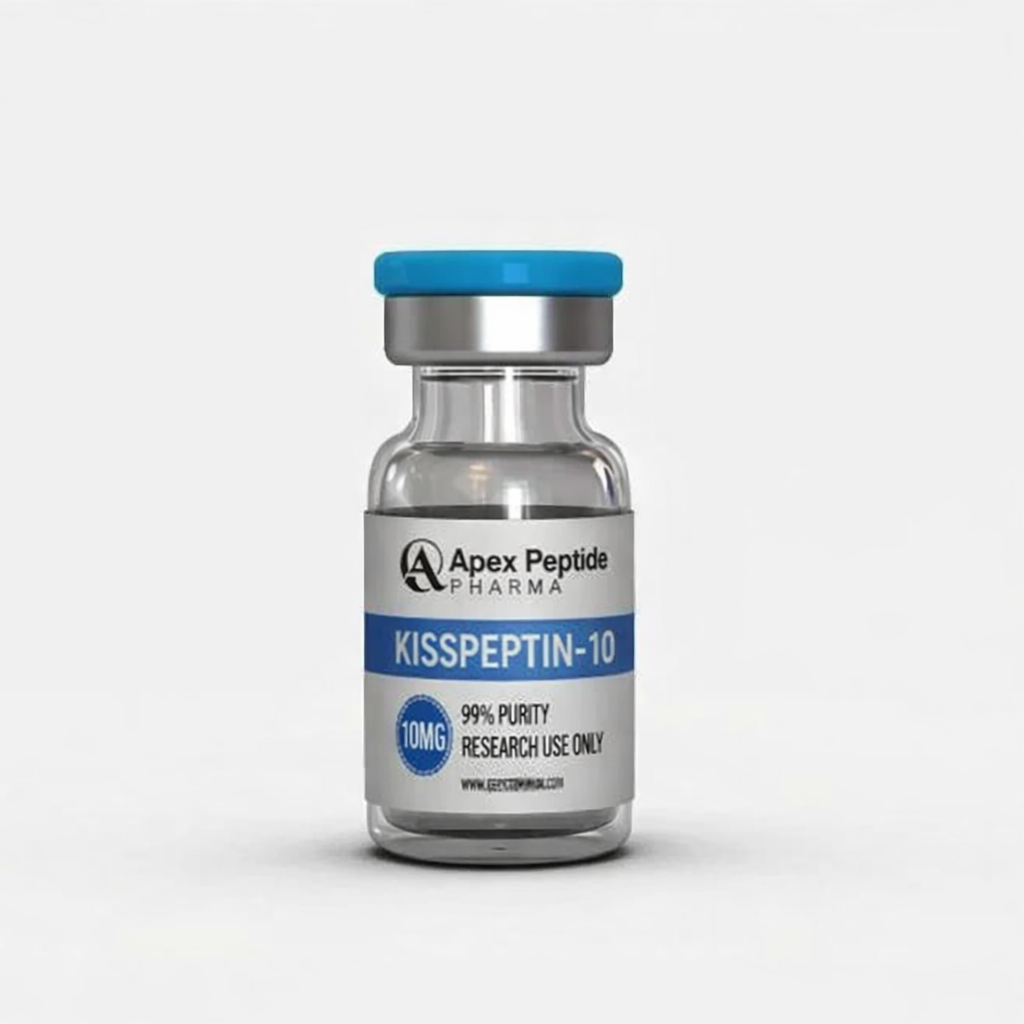
Kisspeptin-10 10mg
$59.99
Kisspeptin-10 is a naturally occurring peptide that plays a role in regulating reproduction. It’s the smallest active fragment of a larger protein called kisspeptin-54, named for its 10 amino acid sequence.
Kisspeptin-10 Peptide – Advanced Reproductive Hormone & Libido Support
Unlock natural hypothalamic-pituitary-gonadal axis activation with Kisspeptin-10 (also known as metastin 45-54), a potent synthetic decapeptide fragment of the endogenous kisspeptin protein. As the minimal sequence required for full bioactivity, Kisspeptin-10 acts as a powerful agonist of the KISS1R (GPR54) receptor to stimulate gonadotropin-releasing hormone (GnRH) release from the hypothalamus — triggering robust, physiologic pulses of luteinizing hormone (LH) and follicle-stimulating hormone (FSH) from the pituitary, which in turn drive testosterone production in men and support ovulation/estrogen dynamics in women.
Key Features & Benefits:
- Potent Gonadotropin Stimulation — Rapidly elevates LH (often within 30 minutes) and FSH in a dose-dependent manner, with boluses as low as ~1 μg/kg showing strong effects in men; increases LH pulse frequency, amplitude, and overall testosterone levels during infusion protocols.
- Testosterone & Fertility Optimization — Supports natural endogenous testosterone production, potentially aiding secondary hypogonadism, preventing testicular atrophy (e.g., during TRT), enhancing spermatogenesis, and improving sperm quality/motility in research contexts.
- Libido & Sexual Function Enhancement — Boosts central sexual arousal pathways; emerging studies show kisspeptin modulates brain sexual-processing networks, increases penile tumescence/response to stimuli, and improves behavioral measures of desire and happiness about sex — offering promise for low sexual desire in both men and women.
- Reproductive Health Support — Explored for restoring pulsatile GnRH in conditions like hypothalamic amenorrhea, hyperprolactinemia-induced infertility, and as a safer trigger for oocyte maturation in IVF (reducing OHSS risk compared to traditional hCG).
- Physiologic & Targeted Action — Promotes more natural, feedback-regulated hormone release than direct GnRH analogs or exogenous hormones, with potential mood, energy, and vitality benefits tied to optimized sex steroids.
Why Choose Kisspeptin-10? Kisspeptin-10 stands out for its upstream, master-regulator role in reproduction — directly addressing GnRH pulsatility deficits that underlie many fertility and libido issues. In wellness, fertility, and performance communities, it’s gaining attention as a research favorite for natural hormone restoration, supporting TRT protocols without suppression, enhancing sexual desire/arousal, and aiding conception efforts (timed near ovulation). Users in investigative settings often note improved energy, mood stability, libido drive, and hormonal balance when integrated with lifestyle optimization.
Administration & Convenience: Typically supplied as lyophilized powder (e.g., 5–10 mg vials) for reconstitution; administered via subcutaneous injection for systemic effects (or explored intranasally/IV in research). Common research protocols include low-dose boluses (e.g., 0.1–0.2 mg daily or timed dosing) or pulsed administration to mimic natural rhythms — always personalized and supervised.
Understanding Kisspeptin-10 and the HPG Axis
The story of Kisspeptin-10 begins with understanding why testosterone production sometimes needs a helping hand. When anabolic compounds enter your system, your hypothalamus detects elevated hormone levels and responds by dialing down its own signaling. This creates a cascade effect that ultimately suppresses natural testosterone production through the hypothalamic-pituitary-gonadal (HPG) axis.
Kisspeptin is a family of neuropeptides encoded by the KISS1 gene, and it sits at the very apex of reproductive hormone control. Discovered initially for its ability to suppress cancer metastasis (which is why it was originally called “metastin”), researchers soon realized its profound influence on reproductive function. The peptide acts as what scientists describe as the “master ignition switch” for the entire hormonal cascade.
Kisspeptin-10 represents the minimal active sequence of the full kisspeptin molecule. While the complete protein contains 54 amino acids (kisspeptin-54), research demonstrates that the 10 amino acid fragment retains full biological activity at the KISS1 receptor. This smaller size offers practical advantages including improved stability and potentially better tissue penetration.
When Kisspeptin-10 binds to its receptor (KISS1R, also known as GPR54) on GnRH neurons in the hypothalamus, it triggers pulsatile release of gonadotropin-releasing hormone. This GnRH then travels to the pituitary gland where it stimulates the production and release of two critical hormones: luteinizing hormone (LH) and follicle-stimulating hormone (FSH).
For men, LH is the primary driver of testosterone production. It travels to the Leydig cells in the testes and signals them to synthesize testosterone. FSH, meanwhile, supports sperm production by acting on Sertoli cells. This dual action makes Kisspeptin-10 particularly interesting for post-cycle recovery because it addresses both testosterone production and fertility simultaneously.
Natural kisspeptin levels in blood plasma decline significantly with age. Young adults typically show concentrations around 200 ng/mL, but this drops to approximately 80 ng/mL by age 60. This decline correlates with the gradual reduction in testosterone production that occurs during aging. The connection suggests that supporting kisspeptin signaling may help maintain healthier hormonal function.
How Injectable Kisspeptin-10 Works for Hormonal Recovery
Injectable Kisspeptin-10 enters your system and begins working within minutes. Unlike oral peptides that face degradation in the digestive tract, subcutaneous injection delivers the compound directly into tissue where it can reach systemic circulation efficiently. The peptide has excellent subcutaneous bioavailability, making injection the preferred administration route.
Once absorbed, Kisspeptin-10 travels to the hypothalamus where it interacts with KISS1R receptors on GnRH neurons. This interaction triggers a conformational change in the receptor that initiates intracellular signaling cascades. The net result is increased GnRH secretion in a pulsatile pattern that closely mimics natural hormone release patterns.
Research conducted at Imperial College London demonstrated that intravenous kisspeptin-10 bolus administration produces rapid, dose-dependent increases in serum LH. Peak stimulation occurred at 1 mcg/kg body weight (approximately 0.07 mg for a 154 lb individual), with LH levels rising from a baseline of 4.1 IU/L to 12.4 IU/L within 30 minutes. This represents roughly a 2.5-fold increase from a single administration.
Continuous infusion studies revealed even more impressive results. When healthy male volunteers received kisspeptin-10 at 4 mcg/kg/hour for 22.5 hours, mean LH levels increased from 5.4 IU/L to 20.8 IU/L. More importantly for recovery purposes, serum testosterone rose from 16.6 nmol/L (approximately 479 ng/dL) to 24.0 nmol/L (approximately 692 ng/dL). This 44% increase in testosterone occurred without any exogenous testosterone administration.
The pulsatile nature of kisspeptin-induced hormone release appears particularly beneficial. Lower dose infusions (1.5 mcg/kg/hour) increased LH pulse frequency from 0.7 to 1.0 pulses per hour while also increasing pulse amplitude. This pattern more closely resembles natural hormone secretion compared to the steady-state elevations produced by some other compounds.
The effects of kisspeptin-10 can typically be observed for approximately 24 hours following injection. Peak concentrations of LH and testosterone appear 45-60 minutes after administration across all tested dosages. Interestingly, research suggests enhanced effects when administered in a fasted state, with one study showing a 50-60 fold increase in LH release in fasted subjects compared to only a 9-10 fold increase in fed subjects.
Kisspeptin-10 vs Traditional PCT Compounds
Traditional post-cycle therapy has relied heavily on selective estrogen receptor modulators (SERMs) like Clomid and Nolvadex, along with human chorionic gonadotropin (HCG). Each approach has distinct advantages and limitations that are worth examining before understanding where Kisspeptin-10 fits into the picture.
Clomid (clomiphene citrate) works by blocking estrogen receptors in the hypothalamus. When the brain perceives low estrogen levels, it increases GnRH output, which subsequently raises LH and FSH. This mechanism effectively kicks starts testosterone production, but the process is indirect. Clomid essentially tricks the body into thinking estrogen is low rather than directly stimulating hormone release.
Many users report significant side effects with Clomid, particularly at higher doses. Visual disturbances including flashes, blurring, and floaters occur in some individuals. Mood changes can be pronounced, with some describing emotional instability during Clomid use. These side effects make it a problematic choice for some despite its proven effectiveness at raising testosterone levels.
Nolvadex (tamoxifen) operates similarly to Clomid but with important differences. It demonstrates stronger estrogen blocking effects in breast tissue (making it the first-line defense against gynecomastia) while producing fewer mood-related side effects for most users. Studies suggest Nolvadex may produce more sustained testosterone elevation over several weeks compared to Clomid, though Clomid creates a more aggressive initial LH surge.
HCG mimics luteinizing hormone directly at the testicular level. It binds to LH receptors on Leydig cells and stimulates testosterone production without involving the hypothalamus or pituitary. This direct action makes it valuable for maintaining testicular function during cycles or jumpstarting production post-cycle. However, HCG does not stimulate FSH, which means it does not fully restore the entire HPG axis.
Kisspeptin-10 offers several theoretical advantages over these traditional compounds. Because it works at the hypothalamic level, it stimulates the entire cascade naturally. This means both LH and FSH increase, supporting both testosterone production and fertility. The pulsatile release pattern it induces more closely resembles natural hormone secretion compared to the constant stimulation from HCG or the rebound effects from SERM discontinuation.
One significant advantage of Kisspeptin-10 is its apparent lack of desensitization issues at recommended doses. HCG can cause Leydig cell desensitization with excessive use, actually worsening recovery in some cases. Studies on kisspeptin-10 have not shown similar desensitization at therapeutic doses, though twice-daily administration in some female studies did show reduced efficacy over time.
The side effect profile of Kisspeptin-10 appears remarkably mild based on available research. Clinical trials report stable vital signs including blood pressure, heart rate, and oxygen saturation throughout study periods. Liver function, kidney function, and electrolyte levels remained unchanged. Some individuals experience brief nausea immediately after injection, but this typically passes within minutes.
Clinical Evidence and Research Findings
The scientific foundation for Kisspeptin-10 use rests on multiple peer-reviewed studies conducted at respected research institutions. Understanding this evidence helps contextualize what the peptide can and cannot do, while highlighting areas where more research remains needed.
The landmark study from Imperial College London published in the Journal of Clinical Endocrinology and Metabolism established the dose-response relationship for kisspeptin-10 in healthy men. Researchers administered intravenous boluses ranging from 0.01 to 3.0 mcg/kg to six volunteers per dose group. LH responses increased progressively up to 1.0 mcg/kg, where maximal stimulation occurred. Interestingly, the highest dose tested (3.0 mcg/kg) produced a reduced response compared to 1.0 mcg/kg, suggesting a ceiling effect.
A separate study examining sexual dimorphism in kisspeptin-10 response found striking differences between men and women. While men showed robust LH and FSH elevation at doses as low as 0.3 nmol/kg, women in the follicular phase of their menstrual cycle showed no response even at doses 30 times higher. Women in the preovulatory phase did respond, suggesting that estrogen priming influences kisspeptin sensitivity. For men using Kisspeptin-10 for PCT, this sex difference is less relevant but highlights the complex interplay between kisspeptin and other hormones.
Research involving men with type 2 diabetes and mild hypogonadism showed particularly encouraging results. A dose of 0.3 mcg/kg stimulated significant increases in serum testosterone and LH secretion in this population, suggesting utility beyond healthy young men. This finding has implications for men whose baseline testosterone production may be compromised by factors beyond recent anabolic use.
Studies comparing kisspeptin-10 to kisspeptin-54 (the full-length peptide) reveal roughly equal potency at the KISS1 receptor, despite the substantial size difference. Both peptides show identical binding affinity in receptor assays. The shorter form offers practical advantages including easier synthesis and potentially improved tissue penetration, making it the preferred research compound.
Regarding fertility applications, kisspeptin research has shown that circulating levels correlate with fertility status in men. Fertile men demonstrate higher plasma kisspeptin levels compared to infertile men. While kisspeptin-10 has not been definitively shown to increase sperm count, some research suggests potential effects on sperm motility in men with normal sperm parameters.
Long-term data on kisspeptin-10 use remains limited, which is important to acknowledge. Most clinical studies involved single doses or short-term administration. Questions about receptor desensitization with repeated use, optimal cycling protocols, and long-term safety require additional investigation. The current evidence supports safety and efficacy for acute use, but extrapolation to extended PCT protocols relies partly on mechanistic understanding rather than direct clinical trial data.
PCT Protocol Guidelines for Kisspeptin-10
Designing an effective PCT protocol with Kisspeptin-10 requires consideration of several factors including the compounds used during the cycle, cycle length, individual response patterns, and whether Kisspeptin-10 will be used alone or combined with other PCT agents.
The timing of PCT initiation follows the same general principles regardless of which compounds you choose. For short-ester compounds like testosterone propionate or trenbolone acetate, PCT can begin 3-5 days after the final injection. For long-ester compounds such as testosterone enanthate, cypionate, or nandrolone decanoate, waiting 14-21 days allows the exogenous hormones to clear sufficiently before attempting to restart natural production.
Standalone Kisspeptin-10 protocols work best following mild to moderate suppression. For researchers who have used low-dose testosterone cycles or shorter durations, Kisspeptin-10 alone may provide sufficient stimulation to restore HPG axis function. The protocol typically runs 4-6 weeks with dosing starting higher and tapering down as natural production resumes.
More aggressive cycles causing significant suppression often benefit from combination protocols. Pairing Kisspeptin-10 with a reduced-dose SERM creates complementary mechanisms: kisspeptin stimulates GnRH release from above while the SERM blocks estrogen negative feedback from below. This dual approach can accelerate recovery compared to either compound alone.
Related Products
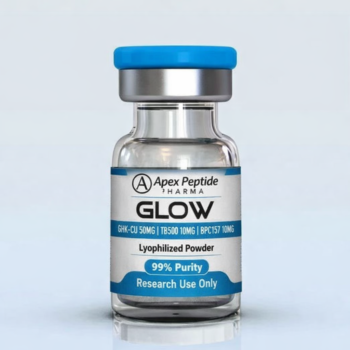
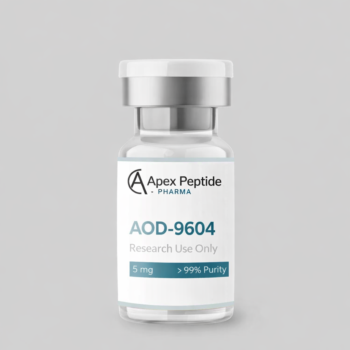
AOD 9604 peptide supports fat loss, metabolism, recovery, and joint health. Safe, non‑stimulant supplement for weight management and vitality.
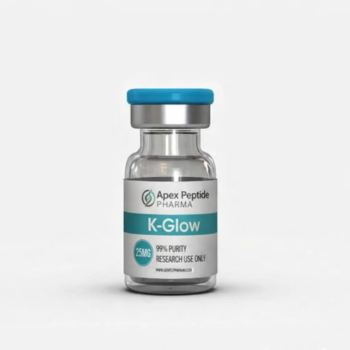
A research-grade peptide blend combining GHK-Cu, BPC-157, and TB-500 for laboratory investigation of tissue repair, vascular formation, and cellular signaling in vitro.
buy HCG 10000IU vial online in USA from ASN-LABS. High-purity Human Chorionic Gonadotropin for testosterone recovery and PCT. Fast, discreet nationwide USA shipping.
Reviews
There are no reviews yet.